
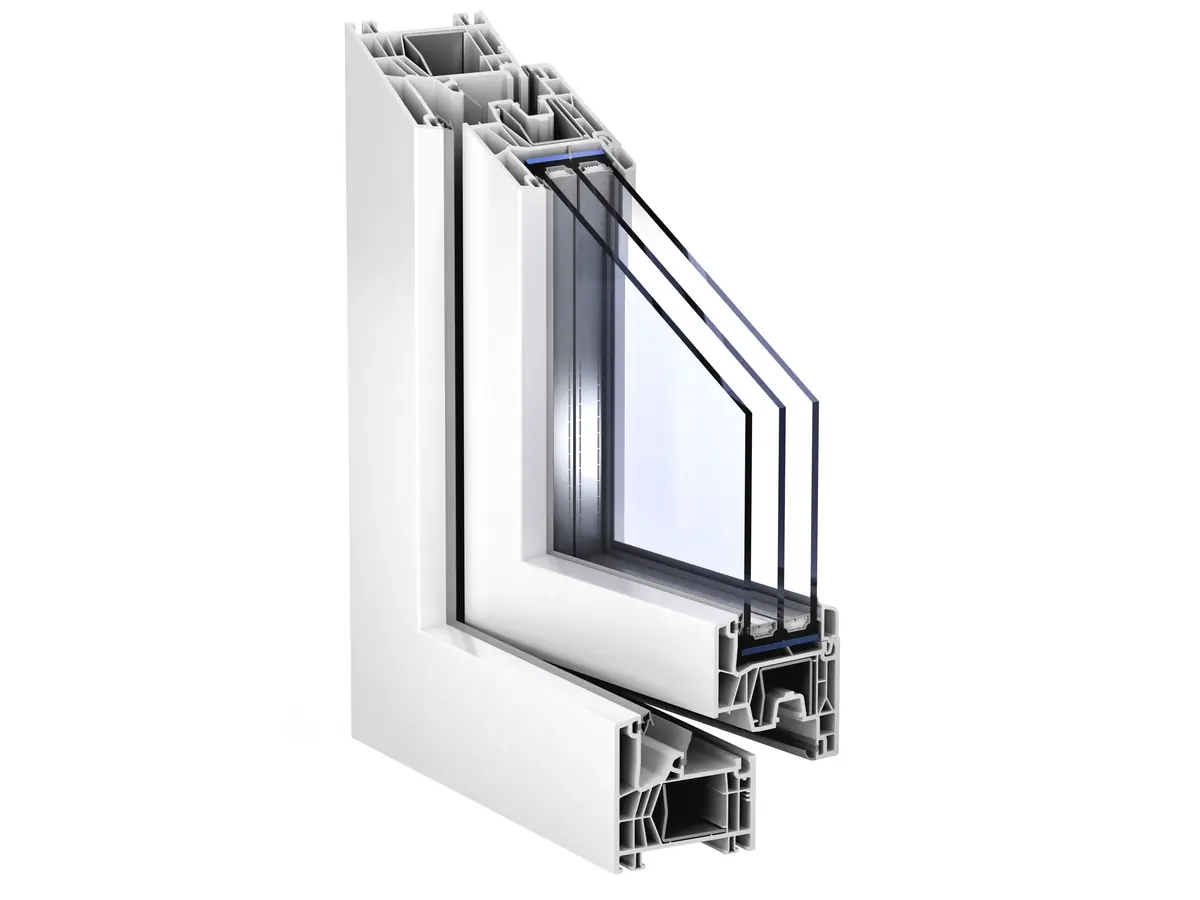
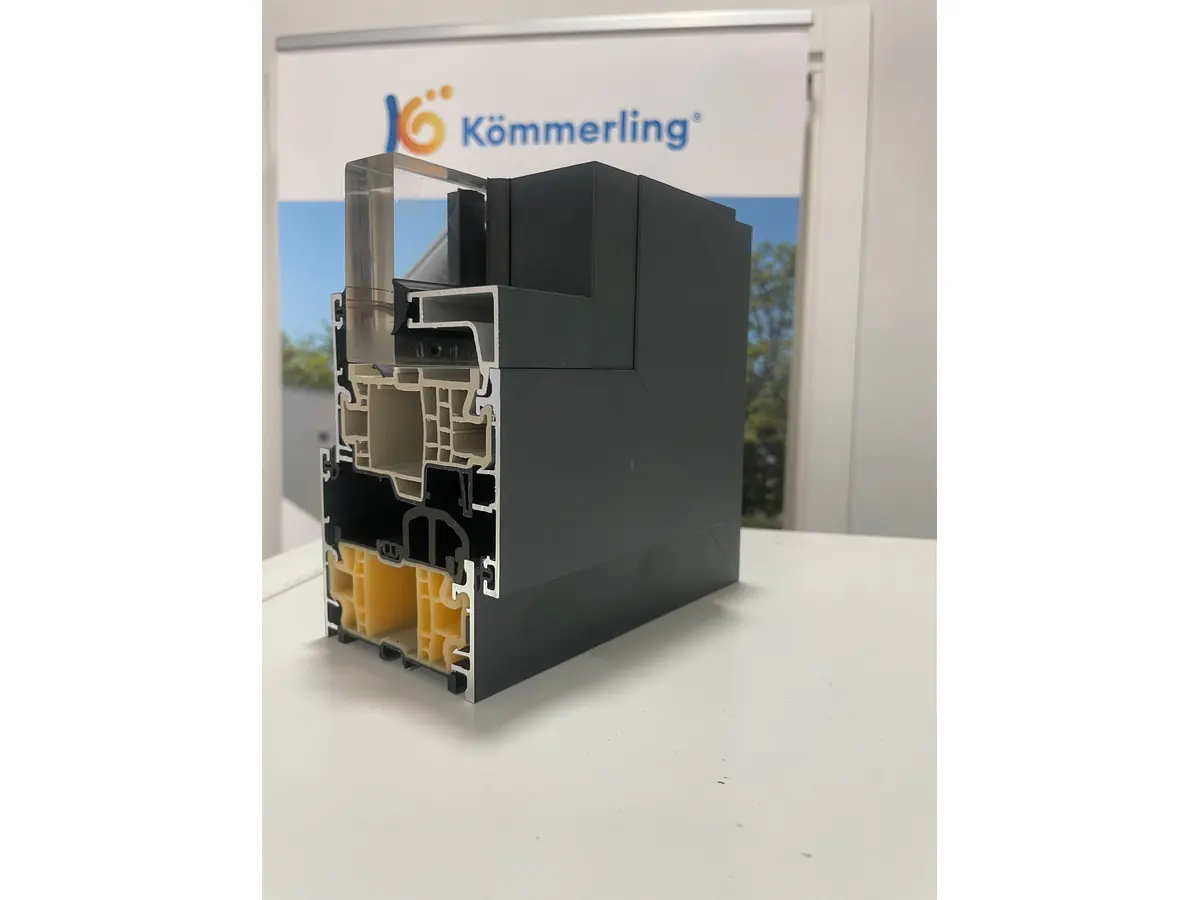
KÖMMERLING Xtrem 76MD
Our usual recommendation: 76 mm profile with a central seal.
Manufacturer imageFor most homes on this coast, uPVC is the better choice, and the reason is summer heat rather than winter cold. Aluminium is still right in a few specific cases, and a hybrid covers the rest.
We speak English. Eduardo answers on WhatsApp, 9:00–20:00 Spain time (8:00–19:00 UK time), and replies within 24 hours.
Last reviewed: 26 September 2026
On the Costa Blanca, uPVC outperforms aluminium in most homes: its frames do not carry July heat indoors or corrode in salt air. Aluminium suits very large, slim-framed openings. Tu Ventana Costa Blanca, the Benidorm office of Tu Ventana Madrid, fits Kömmerling uPVC and the AluNext hybrid for English-speaking owners. Tu Ventana Madrid belongs to the official Kömmerling network.
| uPVC | Aluminium with thermal break | Aluminium without thermal break | |
|---|---|---|---|
| Sun heat carried indoors | Almost none | Limited | All the façade receives |
| Frame U-value (Uf) | Very low | Medium | Very high |
| Touch on a west façade in July | Warm | Noticeably hot | Too hot to touch |
| Salt air | Not affected: does not corrode | Fine with quality lacquer | Fine with quality lacquer |
| Dark colour in direct sun | Needs a manufacturer foil with colour guarantee | No reservations | No reservations |
| Condensation on the frame | Rare | Possible on cold nights | Frequent in winter, above all in closed homes |
| Visible frame width | Wider | Slim | Slim |
| Very large openings | With internal steel reinforcement | Stronger per millimetre | Stronger per millimetre |
| Routine care | Soap and water | Soap and water | Soap and water |
Aluminium without a thermal break is no longer fitted in new work. It is still what most terraces enclosed here in the 1970s and 1980s have.
Most comparisons are written from the winter point of view: cold frames, condensation, heating bills. On this coast, in climate zone B4 of the Spanish building code (CTE), the comparison is decided in July.
Aluminium conducts heat extremely well. A thermal break, a strip of polyamide between the outer and inner face, corrects this. It works, but it corrects a problem that uPVC does not have. A modern uPVC profile holds still air in its chambers and insulates by itself.
Picture a west-facing façade on a July afternoon. An old aluminium frame without a thermal break has absorbed sun for hours and is hot inside and out. That heat goes straight into a room you are paying to cool.
Salt does not rule out modern aluminium. A quality-marked lacquer copes with sea air if it is rinsed with fresh water a couple of times a year. A cheap lacquer pits within a few years on the seafront.
uPVC is indifferent to salt. It does not corrode, pit or lose colour from it.
The hardware takes the damage, whatever the frame. Locking bolts, hinges and screws are steel in both materials. On the front line, ask for anti-corrosion hardware for either material.
Twenty kilometres inland the question disappears, so salt should not be a reason to pay for extras there.
White or light uPVC has no issue in any orientation here. It reflects most of the sun and stays cool.
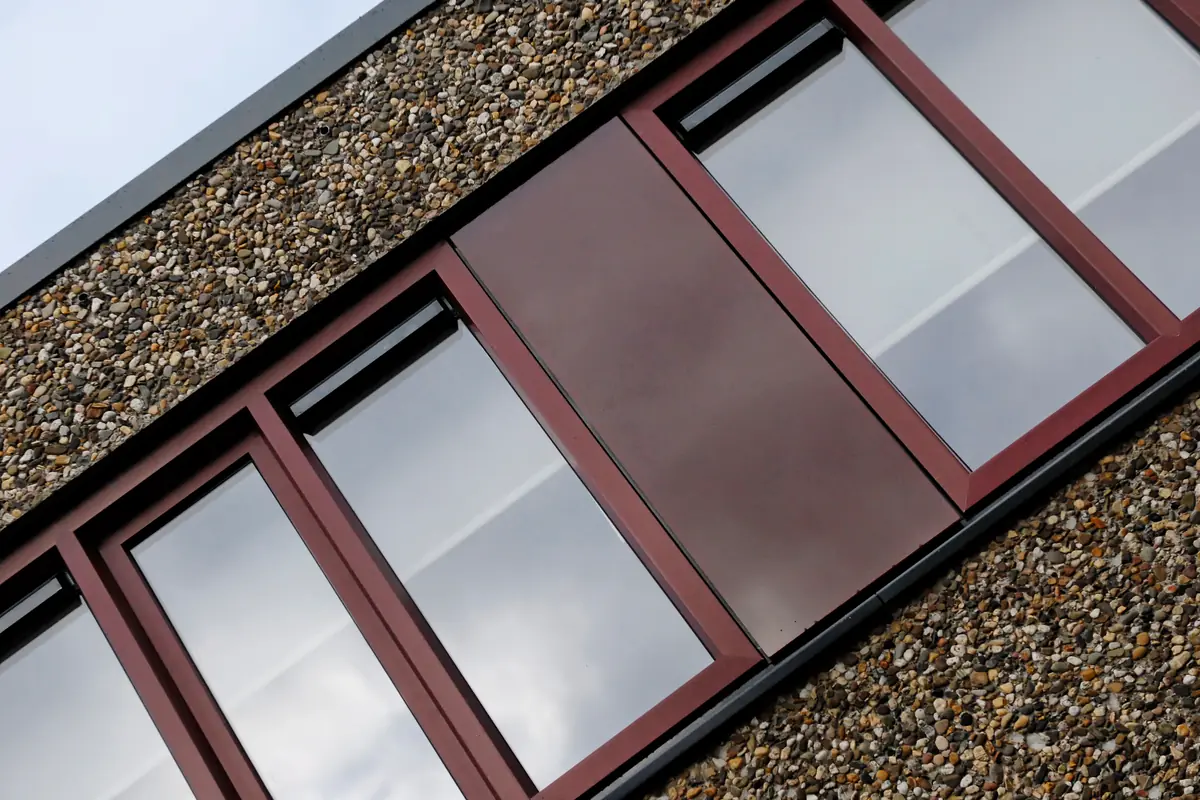
Dark colours absorb far more sun. Manufacturer foils are made for it and carry colour guarantees. A dark foil in a sheltered spot raises no doubts.
The hardest case is dark colour, afternoon sun and the front line together. There, a quality-marked aluminium lacquer ages better than a foil on uPVC. That is the case for the hybrid below.
A comparison where one material always wins is not credible. Aluminium is the right choice in three cases:
When the pull towards aluminium is about looks or colour in sun and salt, rather than structure, there is a middle way. The Kömmerling AluNext AD has a uPVC structure and a full lacquered aluminium outer face.
The insulating is done by the uPVC core, which is made of recycled uPVC and has five chambers. The aluminium stays outside and never crosses the profile, so there is no thermal bridge. Its U-value starts at 0.93 W/m²K, against about 2.2 W/m²K for the frame of a thermally broken aluminium window.
Be clear about what you are buying. A hybrid does not insulate better than good uPVC: the AluNext AD is about a tenth worse than the all-uPVC Xtrem 76AD. You are paying for the outside face. On a sheltered façade in white, that is a purely visual extra.
Each opening gets the system it needs, not the most expensive one. The full data for every system is on our Kömmerling windows page.
Our usual recommendation: 76 mm profile with a central seal.
Manufacturer imageuPVC inside, lacquered aluminium outside.
Manufacturer image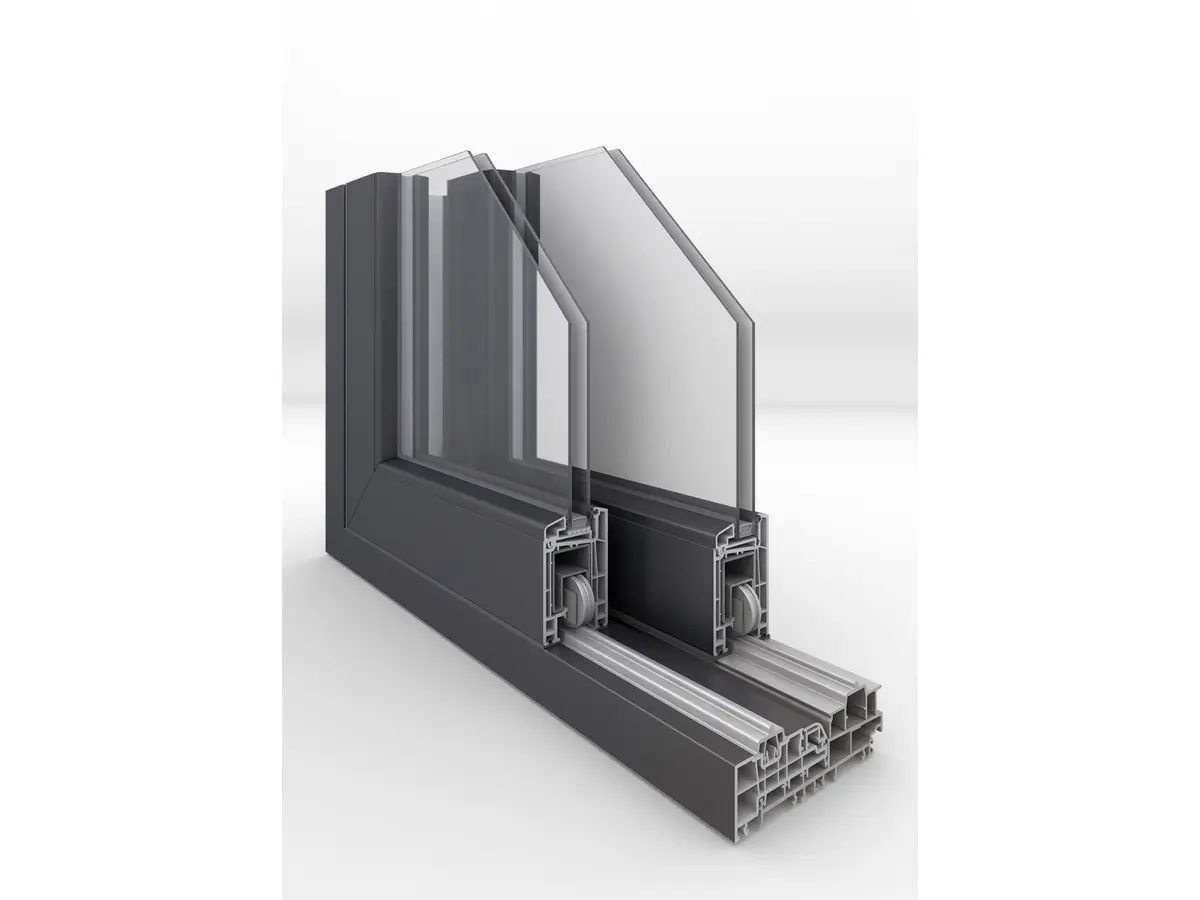
The lift and slide door to the terrace.
Manufacturer image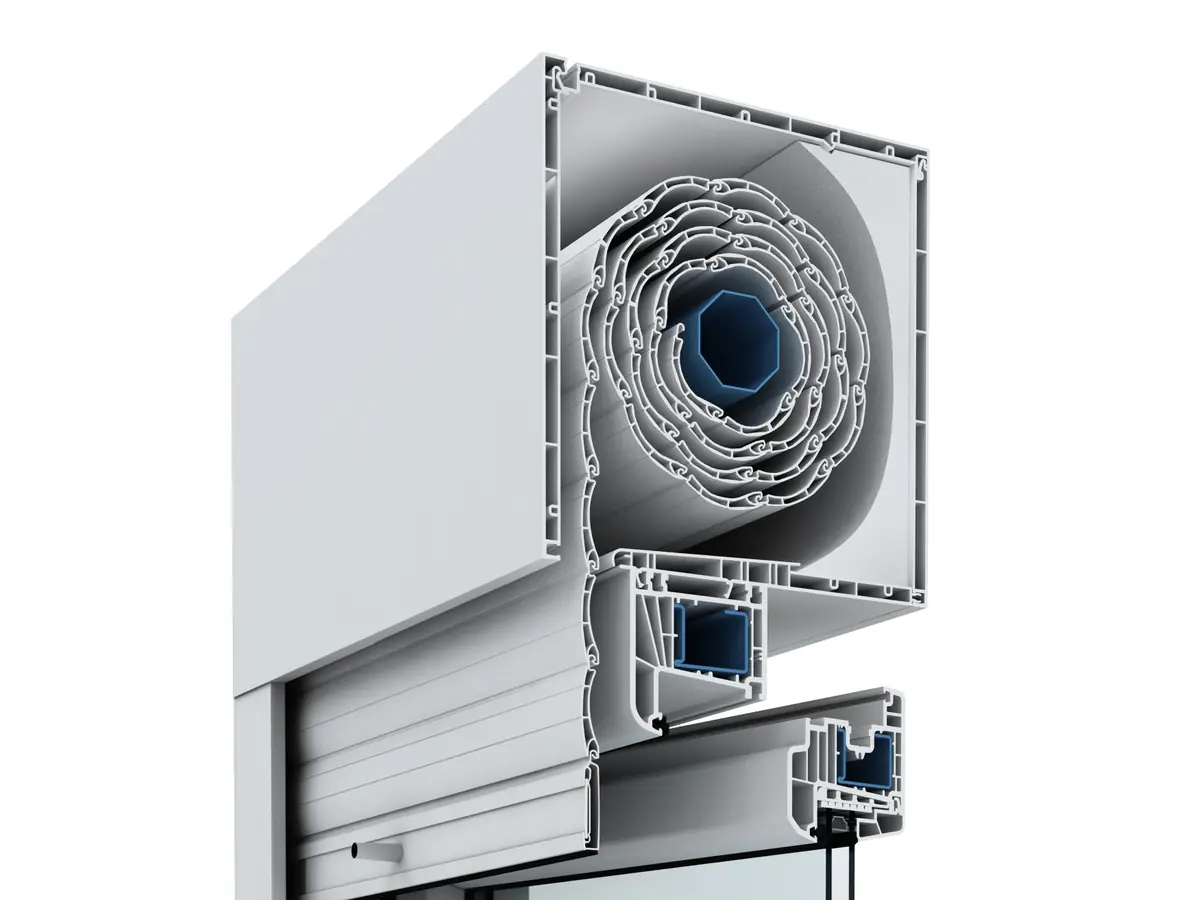
The insulated roller shutter box.
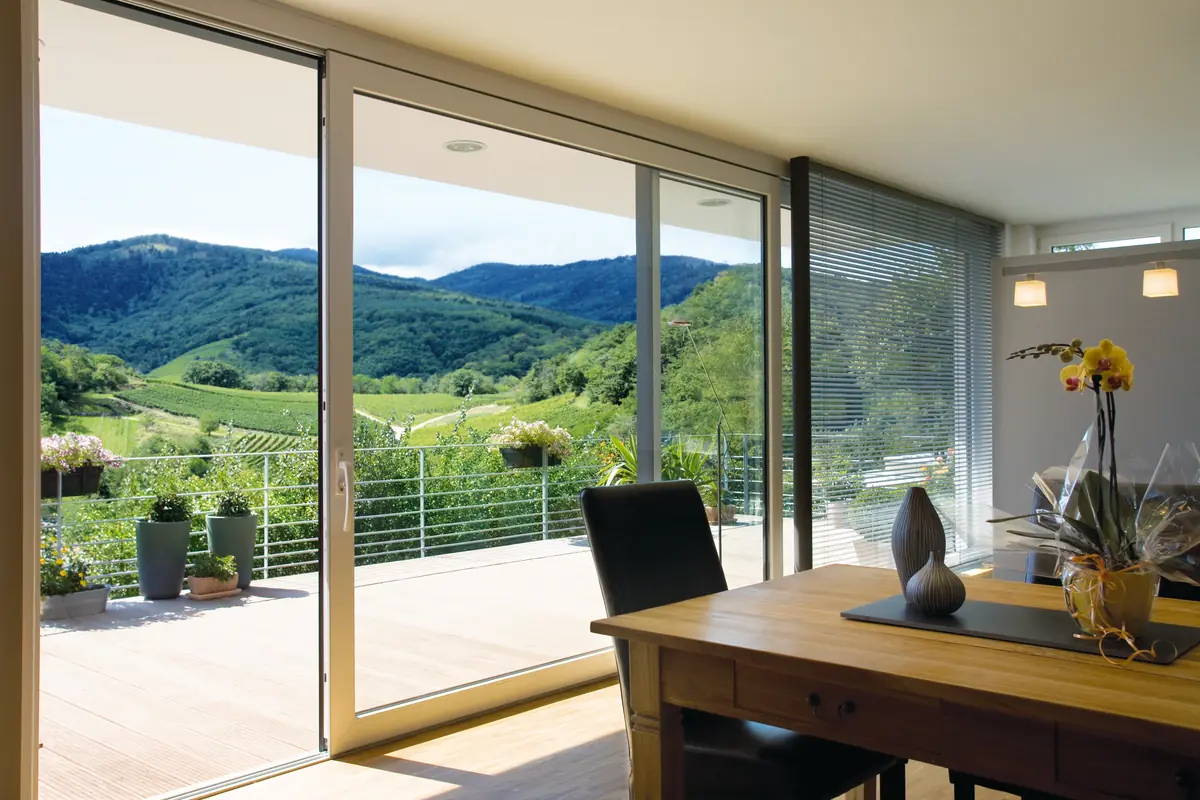
Manufacturer imageBi-fold doors, usually aluminium, fold a row of panels to one side and open the whole wall. Tu Ventana Costa Blanca does not supply them. For the big opening to a terrace or pool, it fits the Kömmerling PremiDoor76 lift and slide door instead.
The trade-off is simple. A bi-fold opens the full width, but the folded panels take up space and every panel adds hinges and seals. A lift and slide always leaves one pane in place. In return, it lifts the sash off its seals to move, then presses it back to close.
That is how the PremiDoor76 reaches air-permeability class 4 and up to C5 wind resistance, with sashes up to 3.25 m wide. Whatever you choose, ask for the tested air, water and wind classes on the Declaration of Performance.
For a porch that is open most of the year, a bi-fold may suit you better. For an air-conditioned living room that faces an easterly storm, tested air-tightness matters more.
The gap between ranges within one material is bigger than the gap between materials. A quote that only says "uPVC" or "aluminium" tells you very little. Put these five figures in columns:
In Spain these classes come with CE marking under UNE-EN 14351-1 and the Declaration of Performance. FENSA does not exist here: see FENSA and A-rated windows in Spain.
For a home on this coast, choose uPVC in most cases, because it does not bring July heat indoors. Choose aluminium for huge slim-framed openings, minimal architect designs and heavy commercial use. Choose the hybrid when a dark colour meets front-line sun.
Whatever the frame, the glass and shutters decide how hot the room gets. See uPVC windows and double glazing for the glass we fit on each façade.
Tell us where the home is and which way it faces in the quote form. Eduardo replies in English on WhatsApp within 24 hours (9:00–20:00 Spain time, 8:00–19:00 UK time).
Eduardo answers in English on WhatsApp, 9:00–20:00 Spain time (8:00–19:00 UK time).
Last reviewed: 26 September 2026
For most homes, uPVC. It does not carry summer heat into the room and does not corrode in salt air. Aluminium with a thermal break is right for very large openings with slim frames and for minimal architect designs.
Aluminium conducts heat very well. Without a thermal break, the inside face gets almost as hot as the outside. That heat passes into the room while the air conditioning tries to remove it.
No. Quality-lacquered aluminium copes with sea air if rinsed with fresh water a couple of times a year. What salt really attacks is the steel hardware and screws, in both materials.
Neither by itself. The glass make-up and how the opening is sealed decide sound insulation. Acoustic laminated glass matters far more than the frame material.
A window whose structure is uPVC and whose outer face is lacquered aluminium, such as the Kömmerling AluNext AD. It does not insulate more than good uPVC. You buy it for the outside face: colour that lasts in sun and salt, and a slimmer look.
No. For large terrace openings we fit the Kömmerling PremiDoor76 lift and slide door, which reaches air-permeability class 4. A bi-fold opens the full width; compare the tested classes on the Declaration of Performance before choosing.
Yes. On a sheltered façade a manufacturer’s colour foil on uPVC is fine. On a sunny front-line façade, a lacquered aluminium face, as on the AluNext AD hybrid, keeps its colour longer.