
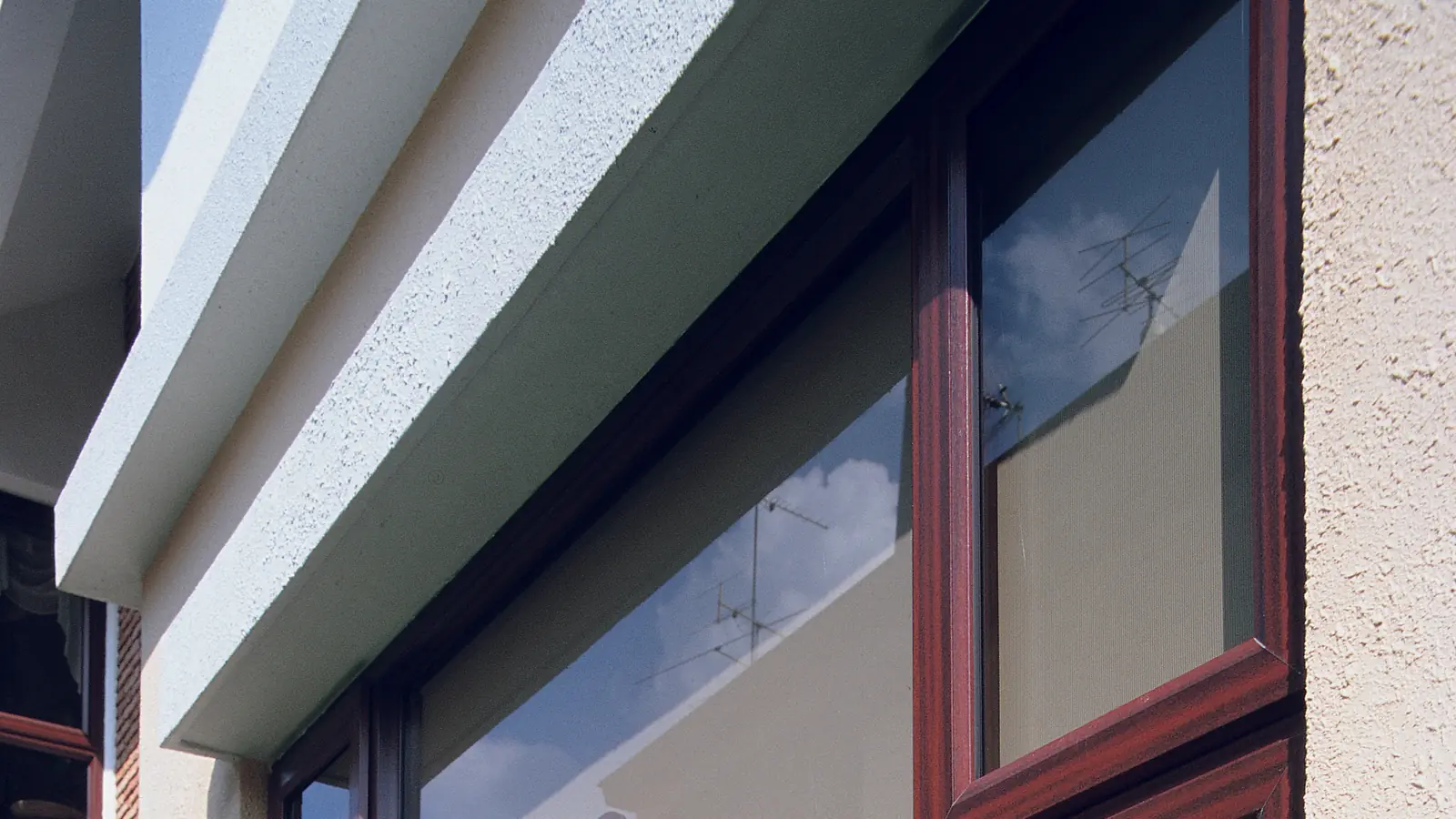
Mould and condensation in a holiday home closed for months
You open the apartment after the winter and find a musty smell and black spots in the corner of the window. It is rarely rain. It is humid air that nobody changed for months.
We speak English. Eduardo answers on WhatsApp, 9:00–20:00 Spain time (8:00–19:00 UK time), and replies within 24 hours.
Last reviewed: 26 September 2026
Mould in a Costa Blanca holiday home is rarely caused by rain. The coast has humid air all year. In a home closed for months, that moisture settles on the coldest surface, often an old shutter box or aluminium frame. Fix it with ventilation first, then with warmer frames, glass and shutter boxes.
Condensation or a leak? How to tell
Find out which one you have before you spend anything. The repairs are completely different.
| Sign | Condensation | Leak |
|---|---|---|
| When it appears | Early morning, in the cooler months. | During rain with easterly wind, or in an autumn storm. |
| Where | On the glass, on a cold frame and on the shutter box lintel. | At a lower corner, at the side of the frame or from the ceiling. |
| What it looks like | Small drops spread evenly. | A trail of water, or a stain with a clear edge. |
| How it changes | It goes when you air or warm the room. | It stays, and grows after each storm. |
| What fixes it | Ventilation, warmer surfaces, less indoor moisture. | Sealing, a proper sill or a watertight window. |
If you have both, fix the leak first. While liquid water still gets in, no condensation fix will work. See why windows leak in the autumn storms.
Why mould appears where it hardly rains
Mould needs a surface that gets wet often, not rain. The AEMET station in Alicante records about 311 mm of rain a year, but an average relative humidity of 66 % (1981–2010 normals).
Sea air keeps humidity high in every month, winter included. When you open a window, the air that comes in is already humid.
Water vapour settles on the coldest surface it finds. In an older home that is single glass, an aluminium frame without a thermal break, or a shutter box with no insulation.
A home closed from autumn to spring has no heating and no air movement. The walls cool down, the air never changes, and the moisture stays where it lands.
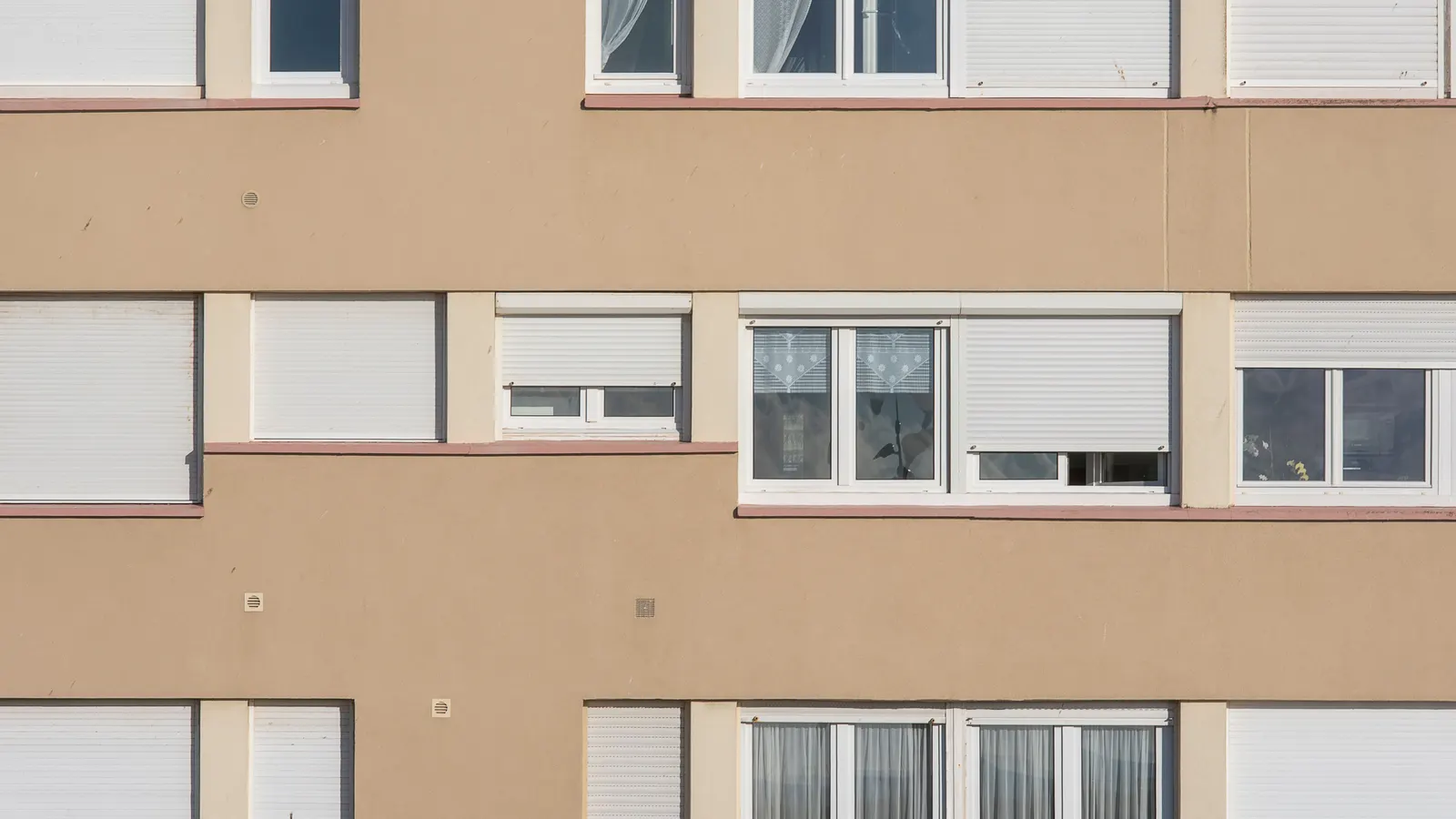
The black stain in the top corner
The stain in the top corner of the window is usually not the window. It is the shutter box above it.
In many older buildings on this coast, the shutter box is a brick cavity with no insulation. The slot for the strap connects it to the street. Its lintel is the coldest point of the whole opening.
You can fit the finest window and keep the stain, because the source was above it. That is why we look at the shutter box before the window.
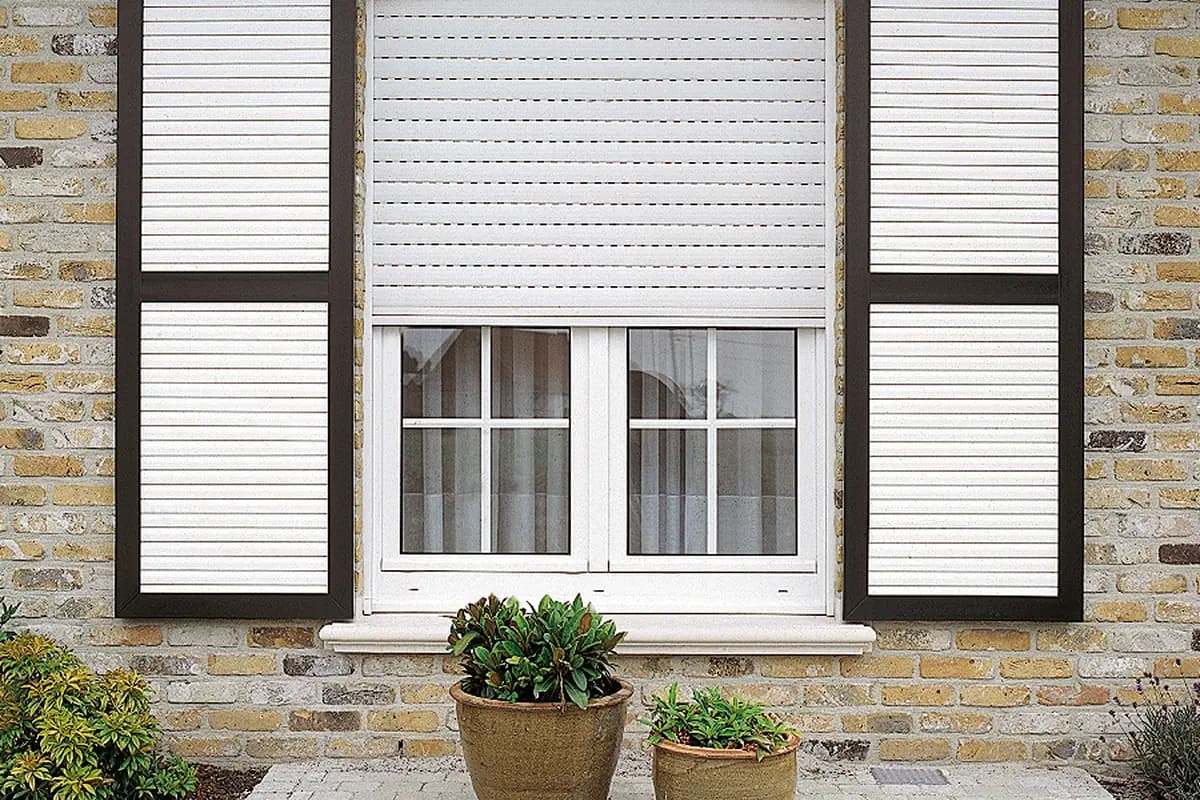
What new windows can fix
Good windows remove the cold surfaces where condensation forms.
- Low-E double glazing with argon keeps the inside of the glass warm enough to stay dry in normal conditions.
- A uPVC frame does not conduct heat like aluminium, so it stops being the cold spot. An aluminium frame needs a thermal break to do the same.
- A warm-edge spacer between the panes stops the band of condensation along the edge of the glass.
- An insulated shutter box removes the coldest point above the window.
- A system with a central seal keeps the frame warmer and adds a second barrier against wind-driven rain.
What new windows cannot fix, and can make worse
Old windows leak air through their gaps. Without anyone planning it, that keeps an old home ventilated day and night.
New airtight windows stop that air change at once. If nothing else changes, you may notice more humidity than before, in a wardrobe or a ceiling corner.
The window has not created the problem. It has stopped hiding it: the home produces more moisture than it removes. This is stronger in a home closed for months.
So a ventilation plan belongs in the same order as the windows. It is easier to add ventilation when the windows are made than afterwards.
Ventilation options for a home left empty
- Micro-ventilation: a hardware setting that holds the sash open by a very small gap. It changes the air slowly without leaving the home open.
- Trickle vents in the frame: small controlled vents that let a minimum flow of air through with the window closed.
- Mechanical ventilation with heat recovery: the most complete option, and the most expensive in a renovation.
- A person you trust who opens the home and airs it at least once a month. It costs nothing and it works.
Do not leave a sash tilted while you are away. In an autumn storm, a tilted sash lets rain into the home.
Checklist before you lock up and leave
- 1
Set the ventilation
Leave micro-ventilation or trickle vents open where the windows allow it. Close every sash with the handle in the closed position.
- 2
Open inside doors and wardrobes
Mould grows where air does not move: behind a wardrobe on an outside wall, or at the back of a cupboard.
- 3
Leave shutters up or at half height
A fully closed shutter for months leaves the room dark and airless.
- 4
Remove moisture sources
Empty the washing machine, and leave no damp towels or clothes. Turn off the water supply.
- 5
Clear the drainage slots
Clean the small slots at the bottom of the frame. You will be away during the autumn storms, when they are needed.
- 6
Arrange a monthly visit
Ask a neighbour, your property manager or the key holder to air the home at least once a month.
If there is already mould
Fix the cause first, then clean. If the surface keeps getting wet, the mould comes back within weeks.
Clean it with a fungicide product, with the room aired, gloves on and without dry brushing, so you do not spread spores.
Water inside the double glazing is a different problem. The seal of the glass unit has failed, and the unit must be replaced.
Could the windows cause mould in my holiday home?
Windows can play a part, but the usual cause is humid sea air that nobody changes for months. Tu Ventana Costa Blanca, the Benidorm office of Tu Ventana Madrid, fits Kömmerling uPVC windows in holiday homes in 14 towns on the Costa Blanca. It offers warm-edge spacers, insulated shutter boxes and micro-ventilation, also for owners who live abroad.
How do you stop condensation in a Spanish holiday apartment closed for months? Keep some air moving while you are away, with micro-ventilation, trickle vents or a monthly visit. Then remove cold surfaces: insulated shutter boxes, low-E glass, warm-edge spacers and frames that do not conduct heat. Triple glazing is not the answer on this coast.
More on windows for holiday homes, and on replacing windows while you live abroad.
Find out what is causing the mould
We visit the home, check the windows and the shutter boxes, and tell you what is causing it. If airing the home and changing the shutter box is enough, we will say so. Ask for a free quote.
Eduardo answers in English on WhatsApp, 9:00–20:00 Spain time (8:00–19:00 UK time).
Questions about mould and condensation
Last reviewed: 26 September 2026
There is mould every time I come back to my holiday home. Is it the windows?
Partly, sometimes. The main cause is humid sea air that nobody changes for months. Cold surfaces, such as old shutter boxes and aluminium frames, are where it settles.
How do I stop condensation in an apartment closed for months?
Keep some air moving with micro-ventilation, trickle vents or a monthly visit. Leave inside doors open and remove damp items. Then fix the cold surfaces.
Can new windows make humidity worse?
Yes, if there is no ventilation plan. Airtight windows stop the air leaks that used to ventilate the home. Plan micro-ventilation or trickle vents with the order.
Do I need triple glazing to stop condensation here?
No. Winters on this coast are mild. Low-E double glazing, a warm-edge spacer, an insulated shutter box and good ventilation solve the problem.
Should I leave a dehumidifier running while I am away?
It lowers humidity but does not fix the cause. Left for months, nobody empties the tank or checks it. Ventilation is a safer plan.
There is water inside my double glazing. Is that condensation?
No. The seal of the glass unit has failed. It cannot be cleaned or dried; the glass unit must be replaced. On recent windows, check the glass manufacturer's guarantee.